









- Question One
- What are Forex deposit bonus?
- Question Two
- What does the Forex deposit bonus mean?
- Question Three
- How is the Forex deposit bonus calculated?
- Question Four
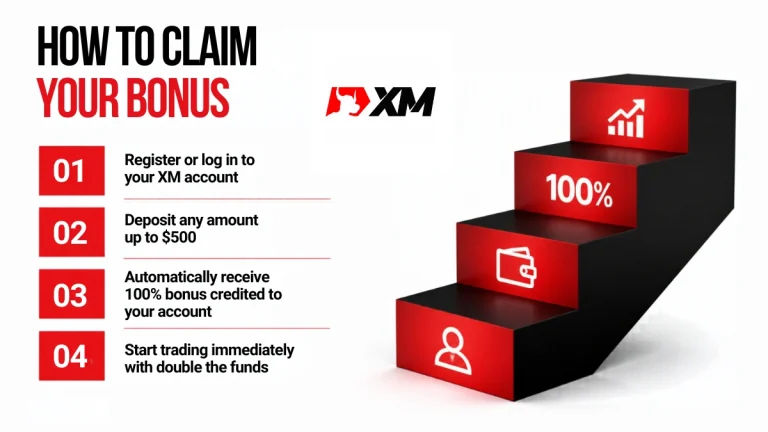
- How do I get a Forex deposit bonus?
- Answer Four
Find out how to get one! Learn how you can receive a forex deposit bonus when opening an account.
- Question Five
- How do I withdraw my Forex deposit bonus?
- Answer Five
The withdrawal of the forex deposit bonus is easy. You can find out how to make a request for it here.
Bottom Content
Forex Deposit Bonus Extra Trading Funds in 2026
Extra trading funds can give your forex account more room to move, and that is why deposit bonuses still draw attention in 2026. A good Forex deposit bonus can boost margin, increase trade size, and help you test ideas with less of your own cash on the line.
Still, the bonus itself is usually not free money you can withdraw right away. Some brokers offer percentage match deals, tradable credit, rescue bonuses, cashback, or limited-time welcome offers, but the real value depends on the rules behind them, and on how you use the extra funds once they hit your account.
What a Forex Deposit Bonus really adds to your account
A Forex deposit bonus adds extra trading credit after you fund a live account. That extra credit can make a small deposit feel larger, which is why these offers get so much attention.
In practice, the bonus changes how much room you have to trade. It can support larger position sizes, give your margin more breathing room, and help you test ideas with real money instead of a demo balance. Many brokers use these offers to attract new clients, and some also use them to reward repeat deposits from existing traders.
How percentage bonuses and flat bonuses work
Most deposit bonuses fall into two simple formats, percentage matches and fixed cash credits. A percentage offer adds a set share of your deposit, while a flat bonus adds the same amount no matter what you deposit, as long as you meet the minimum.
A 50% bonus on a $200 deposit adds $100 in bonus credit. A 100% bonus on that same deposit adds $200. With a 125% bonus, the broker adds $250 on a $200 deposit, and a 150% bonus adds $300. Some promotions go even higher, especially on welcome campaigns or special events.
Flat bonuses are easier to picture. If a broker offers $100, $500, or $1,500 in bonus credit, that amount lands in your account after you meet the deposit rules. The size of your deposit may still matter, because brokers often set minimum funding levels before the bonus activates.
Here’s a quick example:
| Deposit | 50% Bonus | 100% Bonus | 125% Bonus | 150% Bonus |
|---|---|---|---|---|
| $100 | $50 | $100 | $125 | $150 |
| $200 | $100 | $200 | $250 | $300 |
| $500 | $250 | $500 | $625 | $750 |
A flat offer works differently. If the broker gives you $500 bonus credit after a qualifying deposit, the amount stays fixed. That can be useful when you want a simple, easy-to-read promotion without doing percentage math.
The key point is simple, a bigger deposit usually unlocks a bigger bonus. However, the bonus rules, cap, and eligible account type matter just as much as the headline number.
Why traders use bonus credit as extra trading room
Traders use bonus credit because it gives the account more room to breathe. Extra funds can help with position sizing, especially when you want to keep trade risk small relative to account balance.
A larger balance also gives you more margin buffer. That matters when the market moves against you and you want to avoid getting stopped out too soon. In other words, the bonus can help you stay in a trade long enough for your plan to play out.
This is one reason traders like deposit bonuses for live accounts. They can test a strategy with real market conditions, real spreads, and real emotions, but with a little more cushion. That can be useful for newer traders and for active traders who need flexibility during short-term swings.
Used well, the bonus can do a few things at once:
- It can support smaller risk per trade while keeping enough margin open.
- It can help you hold trades longer if your setup needs room.
- It can give you extra flexibility when the market becomes choppy.
- It can let you practice with live execution without funding the entire buffer yourself.
Still, the bonus should not push you into careless trading. A larger balance can tempt traders to open oversized positions or ignore risk rules. That usually ends badly. The bonus should back your plan, not replace it.
A bigger balance can make your account feel safer, but only if your risk stays under control.
What the bonus is not, free money you can cash out right away
A Forex deposit bonus is usually promotional credit, not cash in your pocket. It helps your trading account, but it does not behave like a bank transfer or a gift card.
In most cases, you cannot withdraw the bonus itself right away. Brokers often attach trading volume requirements, time limits, or other conditions before any related profits can be withdrawn. Some brokers allow only profits to come out, while the bonus credit stays locked until you meet the campaign rules.
The bonus can also disappear if your account drops too far. If your deposit balance falls to zero, or if you withdraw in a way that breaks the promotion terms, the broker may remove the bonus credit. That is common with credit bonuses and rescue-style promotions.
A simple way to think about it is this:
- Deposit funds are your money.
- Bonus credit is extra trading power from the broker.
- Withdrawable profit is what you may keep after meeting the rules.
So if you add $200 and receive a $200 bonus, your account may show $400 in trading value. But only the part allowed by the broker’s terms can later move out of the account. The rest is there to support trades, not to act as instant cash.
That is why the fine print matters. The bonus can help your account in a real, practical way, but it only has value if you understand the limits before you claim it.
The rules that decide whether your bonus is useful or frustrating
A Forex deposit bonus can add real trading room, but the rules decide how much value you actually get. Some offers are simple and fair. Others look generous at first, then turn into a long checklist of deposit limits, lot targets, and account rules.
That is why the fine print matters more than the headline percentage. A 100% bonus sounds strong, yet it can feel useless if you can’t meet the trading volume, withdraw profits, or even qualify for the right account. The best offers are the ones you can use without changing your trading plan.
Trading volume requirements can make or break the offer
Many brokers tie bonus profits to trading volume. That means you may need to trade a set number of lots, reach a turnover target, or keep the account active for a fixed period before any profit can be withdrawn.
This is where a big bonus can become hard to use. A trader might see a 100% or 125% deposit bonus and expect extra freedom, but the volume target can be heavy. If the broker asks for 10 lots per $100 of bonus credit, that target rises fast as the bonus grows.
A simple example makes the problem clear. Say you deposit $500 and receive a $500 bonus. If the broker requires 5 lots per $100 of bonus, you may need to trade 25 lots before withdrawing profits. For a small account, that can mean weeks of extra trading, more spread costs, and more pressure to take trades you would normally skip.
That is why bonus size alone does not tell the full story. A smaller bonus with fair turnover rules can be more useful than a huge offer with a stiff requirement.
A good check before you claim any offer is this:
- See how many lots you must trade.
- Check whether the target applies to the deposit, the bonus, or both.
- Confirm whether the clock starts when you deposit or when the bonus is credited.
If the volume target pushes you to overtrade, the bonus has stopped helping.
Why some bonuses disappear when you withdraw funds
Withdrawal rules can change the value of a bonus very quickly. In some programs, any withdrawal request reduces the bonus credit or removes it completely. That can happen even if you only take out part of your deposit.
Some brokers go a step further and lock the bonus itself. You may be able to withdraw profits that came from the bonus, but the bonus credit stays in the account. Other brokers remove the bonus when you withdraw funds, while your profits stay eligible only after you meet every condition.
This matters because a bonus can look larger than it really is. For example, a trader might see extra credit in the balance and assume it works like cash. In reality, the broker may cancel that credit once the trader makes a withdrawal. In some cases, the deposit bonus is only there to support trades, not to survive a cash-out request.
Before you accept the offer, check these points:
- Whether profits only are withdrawable, while the bonus stays locked.
- Whether a partial withdrawal cuts the bonus balance.
- Whether a full withdrawal ends the promotion at once.
- Whether unused bonus credit expires after a certain date.
The simplest rule is to treat the bonus as trading support, not spending money. If you need quick access to your funds, a strict withdrawal policy can make the offer more frustrating than helpful.
Account type, region, and verification rules matter
A bonus only helps if your account is actually eligible. Many brokers limit offers to specific live account types, such as standard, bonus, welcome, or premium accounts. Demo accounts almost never qualify, because the broker wants a funded live account before crediting the promotion.
Eligibility can also depend on who you are and where you live. Some campaigns apply only to new clients, while others are for existing customers who make a repeat deposit. A few brokers restrict offers by country or by broker entity, so the promotion may appear on one regional site and disappear on another. That means a trader in one location can see a bonus that a trader elsewhere never gets.
Verification is another step that often gets overlooked. Brokers usually ask for identity documents before they activate the bonus. That can include ID checks, proof of address, or account review inside the client area. If you skip verification, the bonus may stay pending or never arrive at all.
The safest approach is to confirm these details before funding the account:
| Rule area | What to check |
|---|---|
| Account type | Live account only, and whether a specific account label is required |
| Region | Whether your country is eligible for the campaign |
| Client status | New clients only, or existing clients too |
| Verification | ID and address proof before activation |
| Deposit rules | Minimum deposit and accepted payment methods |
These rules can feel small, but they decide whether the bonus lands smoothly or turns into a support ticket. If the account type, region, or verification step is wrong, the offer usually fails before you even start trading.
A good bonus should fit your trading setup, your location, and your withdrawal needs. If any of those parts are off, the headline number loses its shine fast.
How to use bonus funds without taking on too much risk
Bonus credit can make a live forex account feel larger, but that extra room only helps if you handle it with discipline. The best use of a deposit bonus is simple: give your trades more breathing room without letting your position size or emotions get out of control.
The safest approach is to treat bonus funds as support, not as permission to trade bigger all the time. That means smaller entries, clear exit levels, and enough free margin left in the account to absorb normal market noise.
Start with small trades and protect your main deposit
Small trade sizes keep the bonus useful while you learn how the broker’s rules work in real conditions. If you open modest positions, you can see how spreads, swaps, execution speed, and bonus terms affect your account without draining it too fast.
That matters because many bonuses come with volume targets or withdrawal rules. Larger trades can push you toward overtrading just to meet the conditions, and that usually leads to sloppy decisions. Smaller positions give you more time to read the promotion properly and judge whether it fits your plan.
A few habits make a real difference:
- Use stop-loss orders on every trade.
- Set take-profit levels before you enter.
- Keep enough free margin so one losing trade does not squeeze the whole account.
- Risk only a small part of the balance on each setup.
If your main deposit stays protected, the bonus can do its job. It can give you a little extra space without turning every trade into a high-stakes bet.
Match the bonus to your trading style
Different traders use bonus funds in different ways. Scalpers usually care about spread cost, execution speed, and tight risk control, so they need a broker and bonus structure that do not add friction to frequent trading. Swing traders often value flexibility more, because a bonus can help them hold positions longer without tying up all of their own cash.
Higher-volume traders may get the most use out of deposit bonuses, especially if the account terms reward active trading. In that case, the bonus can add margin room and soften the impact of repeated entries.
Long-term traders look at it differently. They may care less about fast turnover and more about stability, account growth, and the ability to sit through normal drawdowns. If a bonus helps with that, it can be a good fit. If it pushes you into extra trades you would not normally take, skip it.
Use the bonus to test a strategy in real market conditions
A bonus is a practical way to test a new setup without putting all your own capital at risk. You can try a different pair, a new timeframe, or another entry method while still trading a live account.
That live testing matters because demo results often look cleaner than real ones. Spreads widen, emotions kick in, and timing gets harder once money is on the line. Bonus credit gives you a lower-pressure way to see what actually works.
Review the results before you add more money. Look at win rate, average loss, and how often the setup hits your stop. If the strategy fails under live conditions, adjust it first. If it holds up, then scale slowly and keep your rules intact.
How to compare brokers offering high deposit bonuses in 2026
A big bonus can look tempting, but the size alone tells you very little. The better move is to compare the full offer, because a generous match means little if trading costs are high, execution is poor, or the withdrawal rules are restrictive.
That is especially true in 2026, when many brokers promote large deposit deals, such as 100% matches, 125% offers, or even bigger seasonal campaigns. Some names, including FBS, XM, Instaforex, HFM, RoboForex, FXCL, M4Markets, FXplayer, and ETRADE, are known for headline-heavy promotions. Even so, the right choice depends on how the bonus fits your trading style, account size, and withdrawal plan.
Look at spreads, leverage, and execution before the bonus size
A large bonus can add extra trading credit, but it won’t fix expensive trading conditions. If spreads are wide, slippage is common, or execution is slow, the bonus gets consumed faster than you expect.
This matters most for active traders. Scalpers and short-term traders feel every pip, while swing traders still pay for poor pricing through wider entry and exit costs. Reasonable leverage also matters, because too much leverage can turn a bigger balance into a bigger risk.
A simple way to judge the value is to compare what you gain against what you lose on each trade. Low spreads and quick execution protect the bonus. High costs chip away at it, trade after trade.
A 100% bonus looks generous, but high trading costs can shrink its real value fast.
When you compare brokers, look at:
- Spreads, especially on the pairs you trade most
- Execution speed, because delays can change your entry price
- Leverage limits, since high leverage can raise both risk and pressure
- Commission structure, if the broker uses raw or ECN-style pricing
A broker with a smaller bonus and cleaner pricing may leave you better off than a bigger offer with costly trades. That trade-off matters more than the marketing banner.
Choose a regulated broker with clear terms
Trust comes first. If a broker is not clear about who regulates it, how the bonus works, and what happens when you withdraw, the offer is hard to trust.
Look for brokers overseen by respected regulators, such as the FCA, ASIC, CySEC, or similar bodies. Regulation does not remove risk, but it does give you a better chance of fair treatment, better fund handling, and clearer complaint paths. Offshore brokers sometimes advertise huge bonuses, yet the terms can be looser and harder to judge.
Clarity matters just as much as regulation. You should be able to read the bonus rules without guessing what they mean. If the terms hide volume targets, exclude common account types, or leave withdrawal rules vague, that bonus can become a headache.
Before you sign up, check whether the broker spells out:
- Who can claim the bonus
- What account types qualify
- How profits are withdrawn
- What happens if you withdraw your deposit
- Whether the bonus expires or gets removed after a set event
A broker with plain terms is easier to work with, even if the bonus percentage is lower. That kind of transparency usually saves time and frustration later.
Check the caps, expiry dates, and eligible payment methods
The biggest number in the promotion is often the least important detail. Bonus caps tell you how much credit you can actually receive, and expiry dates tell you how long you have to use it.
Some offers cap the bonus at a fixed amount, such as $500, $2,000, or $10,000, even if your deposit would qualify for more. Others run for a short period only, especially during holiday campaigns or seasonal promotions. In those cases, timing matters as much as deposit size.
Payment method rules can also change the offer. Many brokers exclude deposits made by certain e-wallets or crypto methods, such as Skrill, Neteller, or USDT. That means you may qualify with a bank card or transfer, but not with the payment method you prefer.
A quick comparison can help:
| Checkpoint | Why it matters |
|---|---|
| Bonus cap | Limits how much credit you can actually get |
| Expiry date | Tells you how long the promotion stays active |
| Deposit method | Some methods are excluded from bonus eligibility |
| Seasonal timing | Limited-time offers can disappear quickly |
| Minimum deposit | You may need to fund more than planned |
If you miss the time window, the bonus may vanish before your account opens. If your payment method is excluded, the broker may reject the credit altogether. That is why the best timing is often the one that matches both your funding plan and the promotion calendar.
The best deposit bonus in 2026 is the one you can actually use. Compare the spread, execution, regulation, terms, cap, and payment rules first, then judge the headline percentage. That order keeps you focused on real trading value, not just a flashy number.
Conclusion
A Forex deposit bonus can add real trading room when the offer is clear and the broker is trustworthy. The extra funds may help with margin, trade size, and live-market testing, but only if you understand the turnover rules, withdrawal limits, and account conditions first.
The best approach is simple, read the fine print, choose a regulated broker, and keep your risk under control. Use the bonus to support a plan you already trust, not to chase bigger trades.
Handled with discipline, a deposit bonus can help your account grow in 2026. Used without judgment, it can create pressure that wipes out its value fast.
Answer One
A Forex deposit bonus is a great way to boost your trading account. Find out how to get a free bonus on your first deposit at any Forex broker.
Answer Two
The forex deposit bonus is the amount of money you get to trade with when you make your first deposit. Find out more about this exciting offer here!
Answer Three
Wondering how the forex deposit bonus works? Our article explains how the bonus is calculated and provides tips on how to make the most of it.
